Monday, 3 May 2010

XIV

                           XIV Mixed media on canvas 16"x 16"


Today is a public holiday in the UK and it is windy and rather cold, not very conducive to going outside, so I have, at last, managed to get this painting finished.

Thursday, 22 April 2010

Wingfield barns


Last Saturday I went to the “Artworks” exhibition at the recently refurbished Wingfield Barns in Suffolk where the work of 30 established East Anglian artists was being shown.

Photography within the exhibition was not permitted but I bought three small paintings that I have photographed at home for this blog post

Untitled 13 by Eleanora Knowland
Watercolour


Sketch Blue 2 by Gabrielle Stoddart


Acrylic and Ink


XIX by Jazz Green


Mixed Media


The exhibition was a delight, a wonderful mix of painting and sculpture was displayed in the marvellous old barn complex at Wingfield College and it was a beautiful warm spring afternoon as a bonus.
  
The tiny village of Wingfield is deep in the Suffolk countryside and the juxtaposition of the church, village pub and the 14th century Wingfield College with the adjacent barns makes a classic English village setting.

The following images are all of Wingfield village, I used the Topaz Adjust software on all of them to give a slightly HDR effect, I am not sure whether it was a good idea.


Tuesday, 13 April 2010

Painting failure


I have been struggling for a couple of weeks, on and off, to rescue a painting that had already had several previous manifestations each resulting in failure and being painted over. Unfortunately this latest effort has ended in the same way so I have decided to burn the canvas and make a fresh start.  Is there such a thing as a rogue canvas?

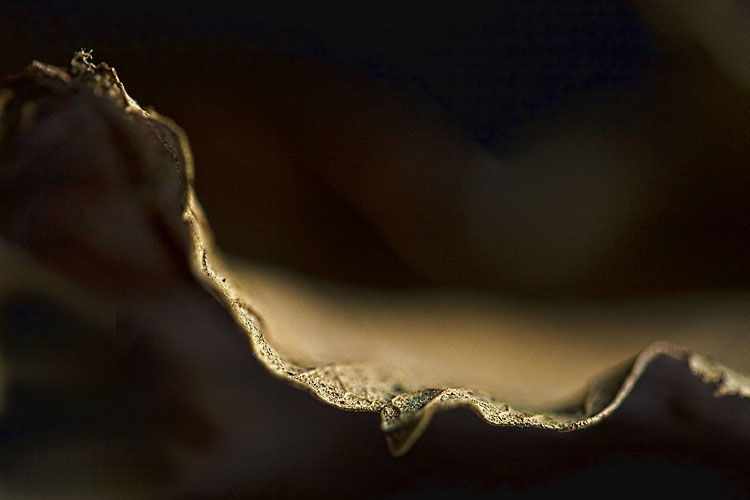
On the edge 1  Digital photograph

Subsequently I have no new painting to post so I am showing a couple of photographs taken a few weeks ago with my favourite lens, the f 2.8 60mm Macro.

On the edge 2  Digital photograph


I am constantly delighted by the abstract images that are available by closely observing the most mundane objects, these two shots are of the edge of a dried up leaf which I picked up almost at random.

Monday, 29 March 2010

Herdwick


Several weeks ago I had to replace a post in my garden fence, wondering how best to dispose of the old 3” x 3” timber set me thinking about the work of Rosalie Gascoigne.

I cut the wood into slices about 1/4” thick and set about arranging them on a board, after many false starts I decided to call the work ‘Herdwick’ as the collection of similar but slightly different pieces reminded me of a flock of sheep and after painting the pieces in appropriate colours this is the result.


Herdwick,  acrylic and sawn wood on MDF panel 


Herdwick sheep are the native breed of the central and western Lake District and live on the highest of England’s mountains.  They are extremely hardy and are managed in the traditional way on the Lake District fells that have been their home for generations.

The word “Herdwyck”, meaning sheep pasture, is recorded in documents going back to the 12th century.  Herdwick sheep are the most hardy of all Britain’s breeds of hill sheep, grazing the central and western dales of the Lake District with fells running to over three thousand feet.


Herdwick sheep


Herdwick farms have typically less than 100 acres of lower, more productive land and rely on the common grazings of the high Lake District fells.  The lambs graze with their mothers on the “heaf” belonging to the farm instilling a life long knowledge of where on the fell they should be grazing.  This is crucial as the central Lake District fells are inaccessible and a sheep which strays from Borrowdale to Eskdale will involve a 100 mile round trip by road for the farmer to collect it.

Thursday, 11 March 2010

A new painting.


                            Untitled 16" x 16" mixed media

Usually when I start a new painting I have a title in mind or at the very least I have settled on one before the painting is finished.  In this case I had a firm idea of the colours and layout of the work but I still have not settled on a title so I will have to resort to ‘Untitled” for the time being.

Following the recent blog from the Katherine A. Cartwright Studio and the subsequent long discussion of the subject in the comments I am left feeling rather guilty.  Perhaps I will add a title when inspiration strikes.

Sunday, 21 February 2010

The elements of design


I don’t know how widely known this book is but I find it endlessly fascinating and I quite frequently pull it out for a quick browse even though I have seen all the images many times. I have had my copy for several years but it is still in print and I urge any artist who doesn’t already own a copy to try to obtain one.

Back cover


For a description of the book I cannot do better than quote from inside the front flap,

The bark of a plane tree in Paris; a detail of a cotton towel in Japan; sunset in the Egyptian desert; soil in the Yosemite National Park, California; a tiled floor in Bangkok; a wall in Ferrara; an iron cart wheel in Antwerp…colours, textures, forms and shapes are the basis of this unique sourcebook that reveals the elements common to all design and literally teaches us ‘how to see’.  Hauntingly beautiful and deeply instructive, it surveys our whole environment, natural and manmade, and shows how it can be defined in terms of basic elements: variable arrangements of dots; lines that are straight, curving, bending or crossing; planes such as rectangles, squares, lozenges, triangles and circles.

All these are represented, with telling juxtapositions, in a wide range of materials and techniques, in one sense timeless and universal, in another datable and culturally conditioned. Ever-recurring design elements, they take us to the heart of the creative process: a transformation that may involve inspiration or imitation, representation or interpretation.

Destined to become a cult book for artists, designers and craftspeople of all kinds, as well as being an important educational tool, this amazing volume is a startling reminder of how the search for something new is a voyage of rediscovery into past and present form.

The book contains 177 colour illustrations and here are a few images as they are shown on opposing pages.
   Brick wall,Troyes, France.                  Detail of woollen kilim, Central Turkey.
          Woman's hat, Zulu people,      Cotton bag, applique, China.
          S,Africa


  Drain covers, Antwertp, Belgium         Detail of blouse,Tokyo, Japan.


Wednesday, 17 February 2010

Nightfall


Nightfall 24" x 28" mixed media on  canvas

I have just finished this painting, which is a sort of progression from my earlier effort ‘Fired Earth’ that I posted a few weeks ago.  I know that some may regard this as rather gloomy but I am quite pleased with it.


On Sunday I went to the ‘Watercolour in Britain’ exhibition at the Norwich Castle Museum and Art Gallery, which was very interesting, the gallery was very busy, more people than I have ever seen there before.  The exhibition covered a rich variety of subject matter by many of Britain’s finest painters from the eighteenth century through to the present day.

Norwich Market c 1950 Watercolour

Earlier works were by JMW Turner, John Sell Cotman, Thomas Girton and many others while later paintings were by such artists as Edward Burra, John Piper, Graham Sutherland and Anish Kapoor.


I have never attempted watercolour painting nor been particularly interested in it but I was intrigued by this exhibition and the wide variety of styles on show. 

Tuesday, 2 February 2010

Mahonia Aquifolium


I recently came across these photographs that I took about 2 years ago, I am still quite pleased with them so I thought I would share them with you.


I was doing a little gentle gardening when I came across the remains of a Mahonia bush that I had dug out because it had grown very misshapen.  The roots caught my attention due to their lovely sinuous shapes and the texture of the bark.


After some cleaning up and trimming I took them into my ‘studio’ and set about trying to make something artistic of them.  I decided to use a very short depth of focus to produce a more dramatic effect and after several attempts I came up with these.


What a great boon digital photography is when you can see your results almost instantly on a large screen and make any desired corrections right away.
Related Posts Plugin for WordPress, Blogger...